What Does DGB20 Mean?
The name tells you most of what you need to know:
- DGB stands for Densely Graded Base.
- 20 refers to the nominal particle size of -20mm, meaning the material is graded so the largest particles are around 20mm.
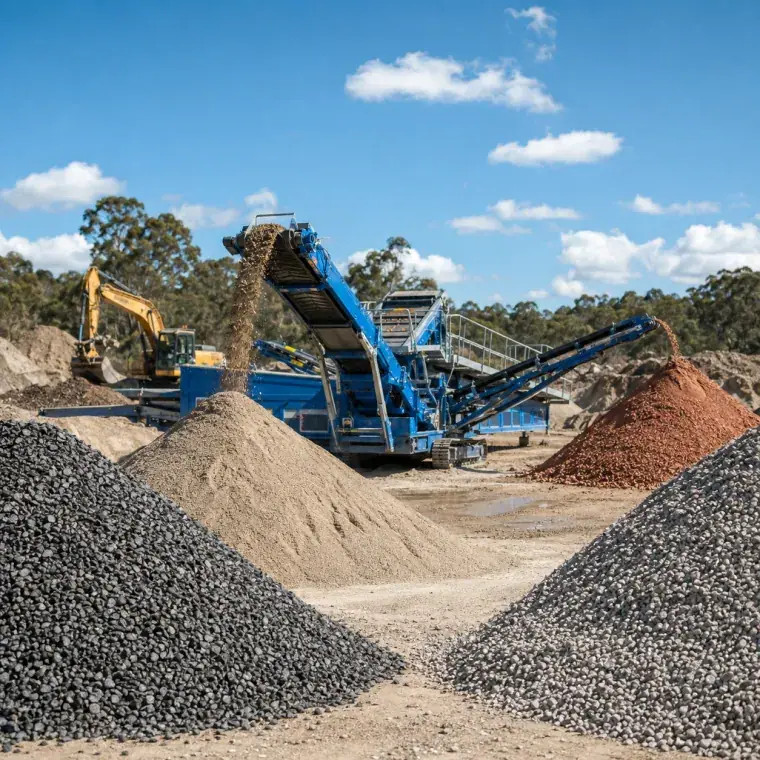
“Densely graded” means the material contains a deliberate spread of particle sizes, from coarse aggregate down to fine particles. The smaller particles fill the voids between the larger ones. When the material is placed and compacted, it locks together into a dense, stable layer that spreads load effectively. That makes it well suited to pavement base and sub-base layers, where strength and stability under traffic matter most.
Material Composition
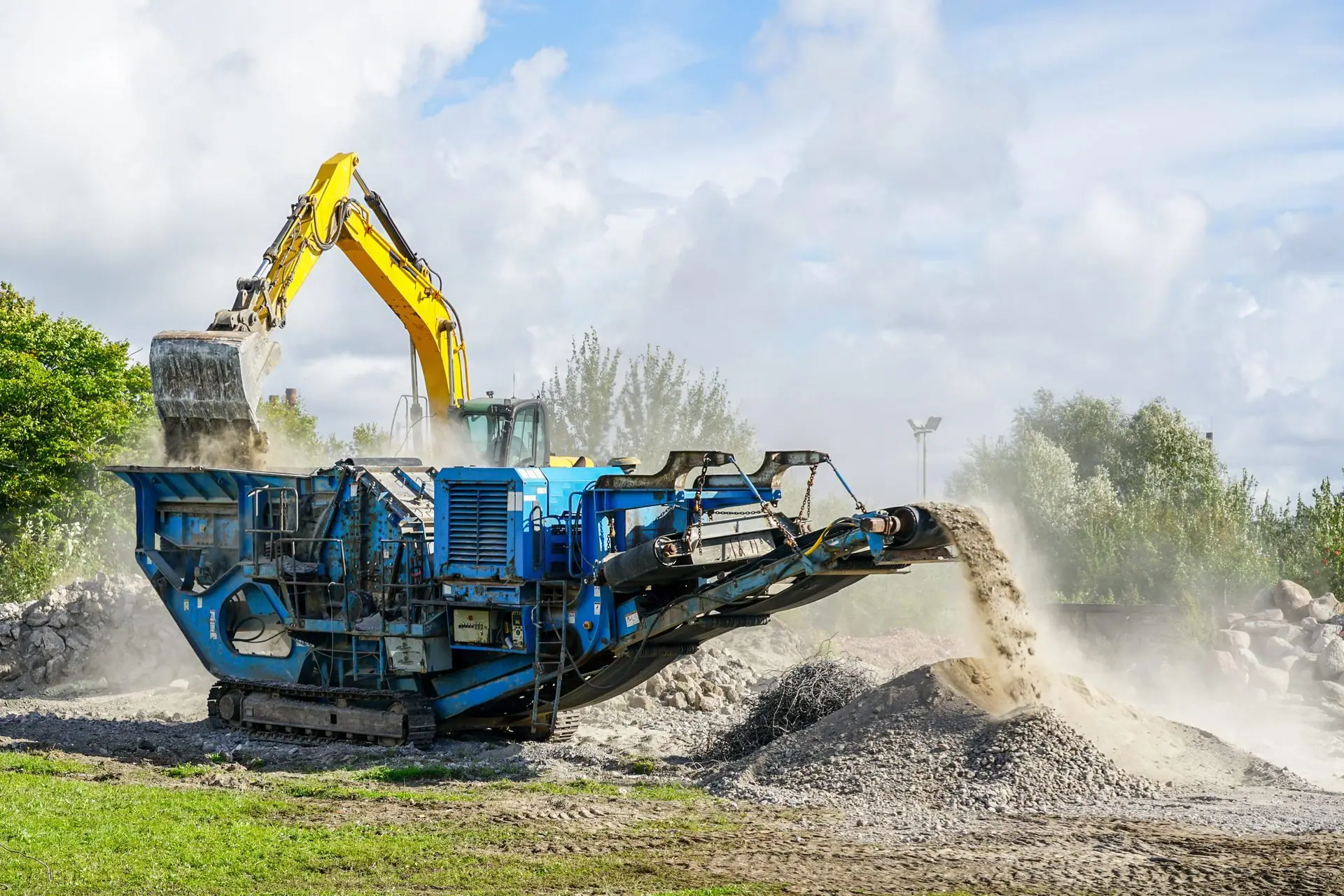
EBH’s DGB20 is a Class R1 recycled concrete blend. It’s produced by processing crushed concrete to a controlled grading, so the finished product is consistent from load to load.
Two points matter to contractors checking the material specs:
- Plasticity index (PI) of 0%. A PI of zero means the material has low clay content and doesn’t change significantly with moisture. In practice, that means high stability, which is important for base layers that need to stay firm.
- TfNSW Specification 3051 (Granular Base). Our DGB20 meets this specification, so you can specify it with confidence on projects that call for compliant granular base material.
Typical Applications
DGB20’s grading and stability make it a versatile choice across a range of construction work, including:
- Sub-base course construction
- Base course pavement layers
- Road construction and rehabilitation
- Civil infrastructure projects
- Car parks and hardstand areas
Whether you’re building a new road, rehabilitating an existing pavement or laying a heavy-duty hardstand, DGB20 provides the compacted, load-bearing foundation the surface above depends on.
Why Use Recycled DGB20?
Recycled road base is now a mainstream choice for NSW projects, not a compromise. Here’s why contractors are choosing it.
It’s better for the environment. Every tonne of recycled DGB20 is construction waste diverted from landfill and put back to productive use. It also reduces demand for virgin quarry material.
It’s EPA compliant. The material meets regulatory testing and quality assurance requirements, so you can use it knowing it’s been properly tested.
It’s cost-effective. In many applications, recycled DGB20 compares favourably on price with virgin quarry material, which matters on projects where material volumes are large.
It’s local. Our facility at Wyong keeps haulage distances short for Central Coast and Hunter projects. Shorter trips mean lower transport costs and fewer truck kilometres on the road.
Quality Assurance
Specifying a recycled material should come with proof of quality, and our DGB20 is backed by it. The product undergoes EPA regulatory testing and meets the relevant TfNSW specification. You receive a documented, certified end product, not just a pile of crushed material.
That paperwork matters for procurement. It gives engineers, project managers and certifiers the evidence they need to accept the material on site.
Common Questions
Is recycled DGB20 as strong as virgin road base?
When it’s produced to specification and compacted correctly, recycled DGB20 performs comparably to virgin road base for most pavement applications. The key factors are the quality of the grading, the consistency of the product and proper placement and compaction on site. Our controlled production process and testing regime are designed to deliver exactly that.
What documentation comes with the material?
We provide quality assurance documentation and EPA compliance records with our material, so you have what you need for project records and compliance checks.