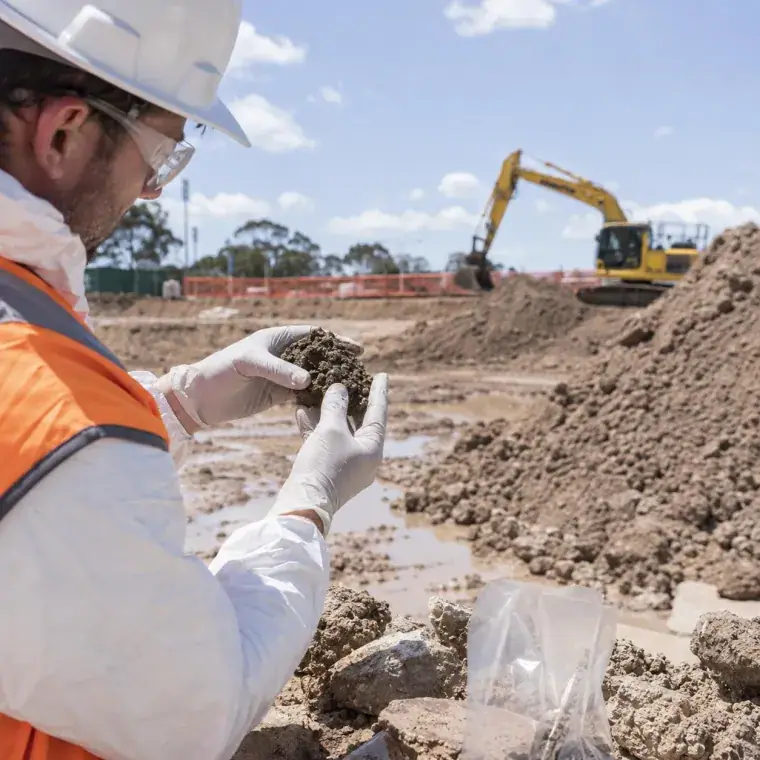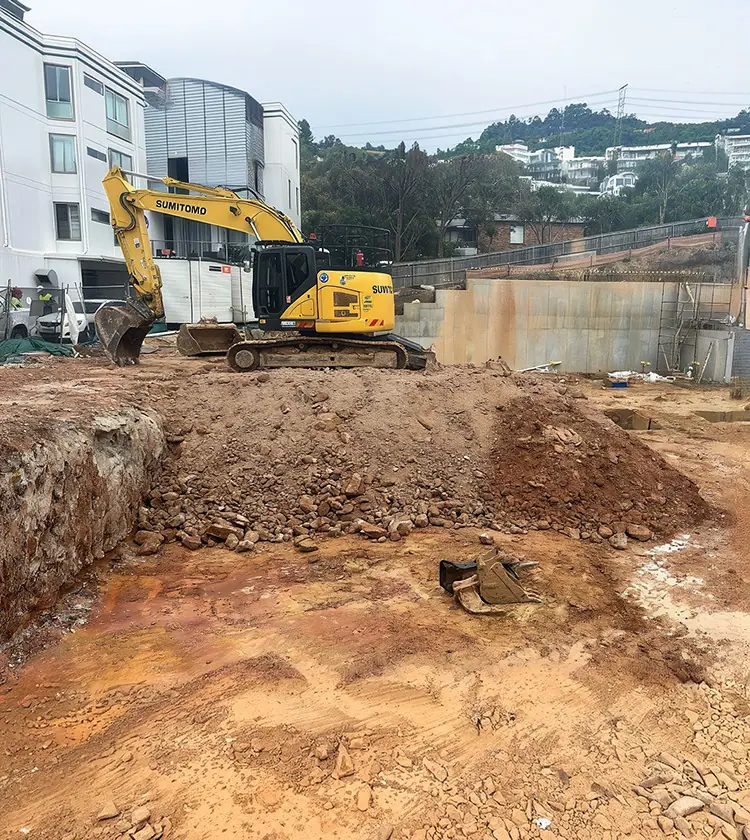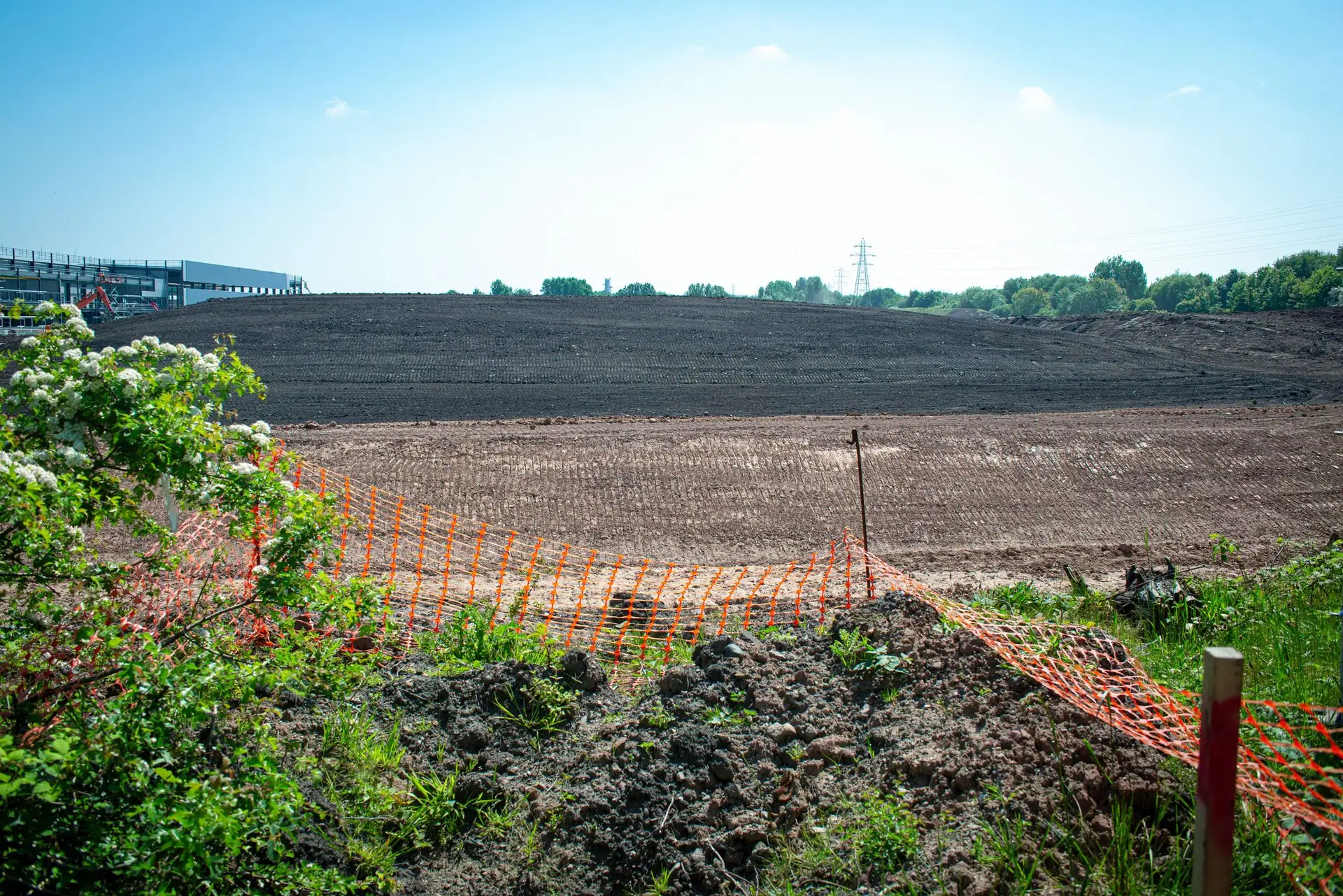
Environmental Remediation
Works delivered under approved remediation plans, with contaminated land excavation, validation support and compliance reporting.
Learn more about Environmental RemediationSoil remediation is the process of treating, removing, or safely containing contaminants in soil so land can be cleared for construction, redevelopment, or regulatory sign-off. On contaminated sites across NSW, the choice between remediation and disposal directly affects project cost, program, and compliance outcomes.
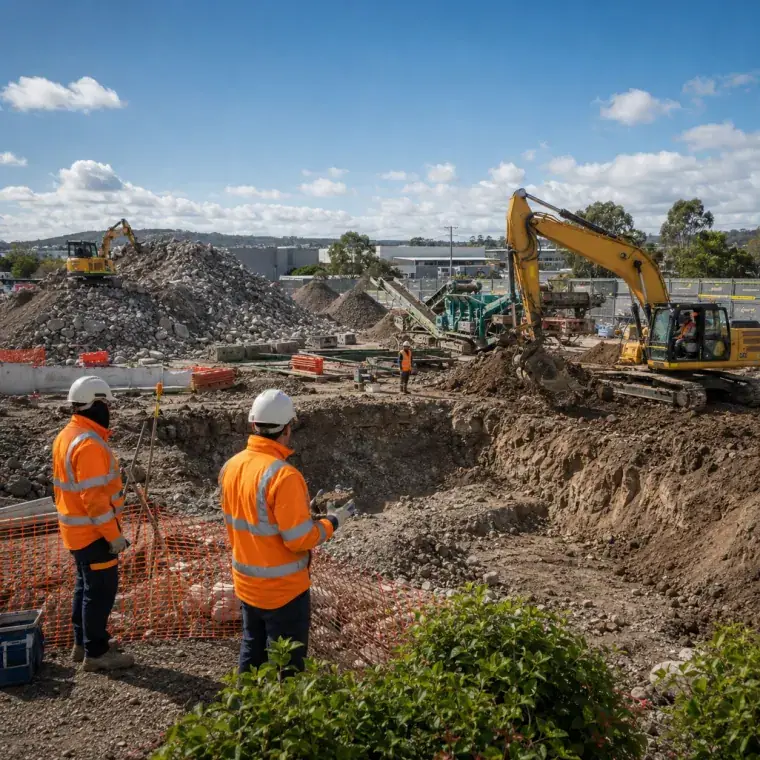
EBH provides soil remediation services NSW-wide for civil, infrastructure, and redevelopment projects where contaminated soil must be treated before construction can proceed. Where soil can be treated and reused rather than sent to landfill, remediation reduces cost, cuts waste, and keeps projects moving. Our role is to execute the physical remediation works defined in approved plans, working alongside your environmental consultant to deliver compliant outcomes on time.
Soil remediation refers to the treatment and management of contaminated soil to reduce contaminant concentrations or prevent their migration. The method used depends on the contaminant type, soil conditions, volume, and whether the treated material can be reused.
At EBH, soil remediation services cover:
All remediation activities are delivered in accordance with a Remediation Action Plan (RAP) or equivalent regulatory direction. EBH does not define remediation scope or prepare RAPs; that work sits with appropriately qualified environmental consultants.
Contaminated soil remediation requires matching the right treatment to the contaminant, the soil type, and the project's reuse or disposal requirements.
EBH delivers:
The treatment approach is determined by the contamination profile established during the environmental site investigation (ESI) and confirmed in the remediation action plan (RAP).
Soil contamination varies in type, concentration, and risk profile. EBH handles soil affected by:
Contaminant identification is established through site contamination assessment, typically completed by an environmental consultant before remediation works commence.
Not every contaminated site requires soil to leave. The decision between onsite soil remediation and offsite processing depends on contaminant type, volume, site constraints, and project program.
Onsite remediation suits projects where:
Offsite remediation applies where:
EBH coordinates both pathways, ensuring treatment aligns with the remediation action plan and validation requirements regardless of where the work takes place.
Brownfield redevelopment and civil infrastructure projects across NSW frequently encounter legacy contamination that must be addressed before construction can proceed.
EBH provides soil remediation for:
Under the Contaminated Land Management Act 1997 (NSW) and SEPP (Resilience and Hazards) 2021 (Chapter 4, formerly SEPP 55), land contamination must be assessed and addressed before changes in land use are approved. EBH delivers the physical remediation works required to satisfy these obligations.
Soil remediation follows a defined sequence from scope confirmation through to site validation. Each step must be documented, traceable, and aligned with the approved remediation action plan.
Understand contaminant types, volumes, treatment methods, and validation criteria defined by the environmental consultant.
Evaluate access, staging, soil conditions, and whether onsite or offsite remediation is appropriate for the project.
Carry out excavation, treatment (bioremediation, stabilisation, soil washing, or offsite processing), and material handling under controlled conditions.
Direct treated material for reuse as recycled product where it meets classification thresholds, or to approved disposal where treatment is not viable.
Coordinate with the consultant for validation sampling, provide remediation documentation, and deliver records suitable for site audit and regulatory review.
This process ensures remediation outcomes are defensible, auditable, and aligned with NSW EPA contaminated land guidelines throughout delivery.
The biggest single cost in contaminated soil management is disposal. Every tonne sent to landfill incurs classification-dependent tipping fees, transport costs, and levy charges. For large civil projects, these costs compound quickly.
Soil remediation offers an alternative. Where contaminants can be reduced through treatment, the soil can often be reclassified to a lower waste category or processed into certified recycled products: road base, bedding sand, aggregates, and engineered fill.
Treatment may be the right path when:
Disposal is required when:
EBH operates at both ends of this decision. Where soil can be treated and reused, our North Wyong facility processes it into certified products that re-enter the supply chain. Where disposal is the only compliant option, our soil disposal services ensure it reaches the correct facility with full documentation. The cheapest tonne is the one that never goes to landfill.
Soil remediation costs are driven by several factors, and understanding them early helps manage budget exposure.
These key cost drivers include:
Early engagement with soil classification and remediation planning reduces the risk of cost overruns once excavation begins.
Successful soil remediation is measured by regulatory closure, not just excavation completion.
EBH supports remediation compliance with:
Remediation works are delivered in accordance with the National Environment Protection (Assessment of Site Contamination) Measure 1999 (NEPM) and NSW EPA contaminated land guidelines. Validation and verification reporting confirms that remediation objectives have been met and the site can proceed to construction or regulatory sign-off.
To confirm remediation scope and pricing, EBH typically requires:
Have a RAP already? Send it with your site investigation report and we can confirm the remediation approach, treatment pathway, and pricing. Contact our team.
Our soil remediation services support:
EBH delivers soil remediation services across New South Wales, with our resource recovery facility based at North Wyong on the Central Coast.
We service projects across:
For projects outside these areas, contact our team to discuss logistics and treatment options.
[FAQS]
Soil remediation is the process of removing, neutralising, or safely containing harmful contaminants in soil so land can be reused for construction, development, or other approved purposes. It covers treatment methods such as bioremediation, stabilisation, soil washing, and excavation for offsite processing.
Costs depend on the type and concentration of contaminants, the volume of soil requiring treatment, whether onsite or offsite methods are used, transport distances, facility acceptance fees, and validation and reporting requirements. Treatment and reuse is often more cost-effective than disposal to landfill, particularly for large volumes of lower-classification material. Early classification and planning helps manage cost exposure.
EBH handles soil contaminated with hydrocarbons (petroleum, diesel, oil), heavy metals (lead, arsenic, chromium, cadmium, mercury, zinc), asbestos (bonded and friable), PFAS (per- and polyfluoroalkyl substances), volatile organic compounds (VOCs), polycyclic aromatic hydrocarbons (PAHs), polychlorinated biphenyls (PCBs), pesticides, herbicides, and acid sulfate soils.
Soil remediation treats contaminated soil to reduce or remove contaminants, often allowing the material to be reused onsite or processed into recycled products. Soil disposal is the controlled tipping of excavated soil at a licensed waste facility when treatment is not viable. Remediation is typically the upstream step; disposal is the downstream endpoint when reuse is not permitted.
In most cases, yes. A Remediation Action Plan is prepared by an environmental consultant and defines the contamination scope, treatment methods, validation criteria, and regulatory requirements. EBH executes remediation works in accordance with approved RAPs but does not prepare them. If you have a RAP ready, send it with your site investigation report and we can confirm scope and pricing.
Timeframes depend on contamination type, volume, treatment method, and validation requirements. Excavation and offsite processing can be completed within days for smaller volumes. Bioremediation and onsite treatment may take weeks or months depending on contaminant breakdown rates. EBH sequences remediation to align with construction programs and minimise project delays.
Where possible, treated soil is processed into certified recycled products such as road base, bedding sand, aggregates, and engineered fill. This diverts material from landfill and reduces disposal costs. Soil that cannot be treated to reuse standards is directed to an approved disposal facility under EPA classification controls.
Yes. EBH manages PFAS contaminated soil in accordance with HEPA (Heads of EPAs Australia and New Zealand) guidance and NSW EPA requirements. PFAS remediation involves specialist handling, containment, and approved disposal or treatment pathways due to the persistent nature of these contaminants.
Works delivered under approved remediation plans, with contaminated land excavation, validation support and compliance reporting.
Learn more about Environmental RemediationOur expertise in managing contaminated soils ensures that you receive top-notch solutions for soil remediation and disposal.
Learn more about Contaminated SoilsClassification-led disposal pathways, approved facility acceptance and documented transport for construction and civil projects.
Learn more about Soil Disposal