Step 1: Classification Is Confirmed
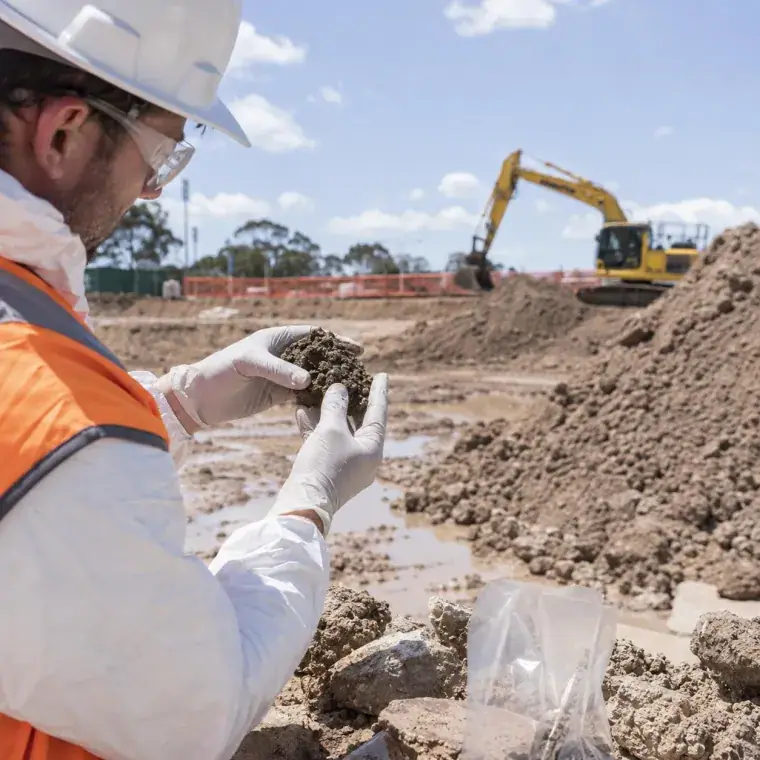
Before or during excavation, the soil needs a waste classification. In practice it’s best done before the first bucket is filled, because facilities won’t accept material without evidence of what it is. The waste generator is responsible for classification, typically with an environmental consultant carrying out the sampling and assessment. Soil that hasn’t been chemically assessed defaults to hazardous waste, so skipping this step can push you into the most restrictive pathway.
The classification then determines where the soil can go:
- General solid waste (GSW): disposal at a landfill licensed to accept it.
- Restricted solid waste (RSW): controlled disposal at facilities licensed for it, which are fewer in number.
- Hazardous waste: can’t be disposed of in NSW without treatment first.
- Asbestos-affected soil: special waste, with its own handling, transport and disposal requirements.
For a full walkthrough of how classification works, see How Is Excavated Soil Classified in NSW?
Step 2: The Disposal or Treatment Pathway Is Confirmed
Not all contaminated soil goes to landfill. Depending on the contaminants, some soil can be treated. Common approaches include:
- Bioremediation: using biological processes to break down contaminants such as hydrocarbons.
- Stabilisation: binding contaminants into the soil so they are less likely to leach.
- Thermal treatment: heating the soil to remove contaminants.
These are specialist services. Stabilisation is also tied to the classification rules. Under an EPA immobilisation approval, treated soil can be reclassified (for example, to general solid waste) if the approval’s conditions are met.
Reuse of treated soil needs extra care. It must still have lawful authority, such as a relevant EPA resource recovery order and exemption or another approval. Processed material can’t be supplied as ENM, so don’t assume treated soil can go back into the ground as clean fill.
Treatment depends on the contaminants, volumes, timing and cost. For most civil projects the practical route is landfill disposal at an appropriately licensed facility. EBH Environmental helps confirm which pathway applies to your soil and routes it to an approved facility.
Step 3: Transport Under Chain of Custody Controls
Contaminated soil must travel under controlled conditions:
- Licensed transport where required. Soil that is hazardous or otherwise trackable waste must be moved by a transporter holding an EPA environment protection licence (for loads over 200 kg), and tracked through the EPA’s system. Asbestos-affected soil has its own tracking and handling rules, including being wetted down in transit.
- Safe loads. Loads must be covered and secured so soil doesn’t escape onto roads or into stormwater.
- A documented trail. Even where statutory tracking doesn’t apply, clients and facilities expect records showing the soil’s movement from site to facility.
EBH Environmental’s transport and logistics service provides licensed haulage of spoil and regulated waste, with approved facility routing, tipping coordination and documented chain of custody.
Step 4: Facility Acceptance
The receiving facility must be licensed, and have the approvals needed, to accept the specific waste classification. It’s an offence to transport waste to a place that can’t lawfully receive it, so this is non-negotiable.
Acceptance should be confirmed before the soil leaves the site. That means checking the facility’s licence and consent, and getting written confirmation of what it will take, such as an approved section 143 notice. For tracked waste, it also involves the consignment authorisation approvals the system requires. Distance limits in the Waste Regulation (the “proximity principle”) can also affect which facilities you can use, so facility choice matters.
A load rejected at the gate means a truck turned around, soil sitting on a site that can’t hold it, and a scramble to find another facility.
Step 5: Documentation and Compliance Reporting
A compliant job leaves a paper trail. Expect to hold:
- The classification report and the laboratory results behind it.
- Waste tracking records where tracking applies.
- Transport records, such as dockets and weighbridge tickets.
- Facility acceptance confirmation, including the facility’s acceptance criteria.
Tip receipts and disposal evidence typically feed into validation reporting for remediation projects. These records need to be available for audit at any time, and clients, certifiers and regulators may ask for them long after the trucks have gone. Keep them for the periods the relevant rules require.
What Can Go Wrong Without Proper Management
Rejected loads. Soil arrives at a facility that can’t take it, or the paperwork doesn’t match the material.
Non-compliant disposal. If soil ends up somewhere it can’t lawfully go, liability can extend to the waste owner as well as the transporter, and false or misleading information about waste is itself an offence.
Regulatory exposure and fines. Maximum penalties for strict-liability waste offences reach into the millions of dollars for corporations, with daily penalties for continuing offences and higher penalties where asbestos is involved.
Rehandling costs and delays. Moving soil twice, paying for extra stockpiling and holding up the next stage of construction can cost far more than getting the process right the first time.